'Shock' of first England farmer hit by bird flu this season
The first farmer in England hit by bird flu this season tells of the "emotional roller coaster" of losing 32,000 hens.
Read moreSep 20, 2026
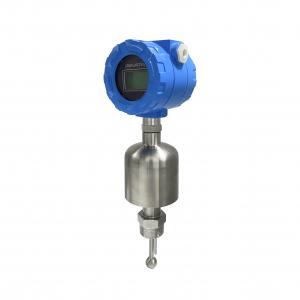
Shenzhen, Guangdong Sep 20, 2026 (Issuewire.com) - In a chemical plant, viscosity is rarely a simple number. Unlike density, which is a bulk property of whatever sits at the sensor, viscosity describes how a fluid responds to shear -- and in chemical production the response is almost always nonlinear. Paints, polymer solutions, emulsions, and coating formulations are shear-thinning: their viscosity drops as shear rate rises. Some fluids additionally behave as solids until a threshold stress is exceeded. Measure such a fluid at the wrong shear rate and you get the wrong viscosity -- not by instrument error, but by definition.
The chemical plant therefore needs a different question answered before any viscometer is selected: what is the shear rate of the process step we are trying to control? Pumping, mixing, coating, and pipeline flow each impose different shear conditions. A viscosity measurement is only meaningful when its shear rate is matched to the process step it represents.
This article works through the three chemical applications where inline viscosity measurement delivers the clearest return -- polymer reaction control, paint and coating production, and emulsion stability -- and the measurement principle that fits each.
Application 1: polymer reaction control -- viscosity as a conversion proxy
In polymerization, molecular weight and conversion both drive viscosity. As monomer converts to polymer, chain length grows and the solution thickens -- viscosity can climb by orders of magnitude over the course of a batch. That makes viscosity the plant's most convenient real-time window into a reaction that lab sampling sees only minutes or hours late.
The catch is the magnitude of the change. A polymerization batch can move from 10 mPa·s to 10,000 mPa·s -- three orders of magnitude. No single viscometer covers that span with good resolution at both ends. The practical approach is to instrument the batch for the range that matters at the decision point: the end-of-batch viscosity that determines when to stop the reaction or add the terminator. If the full range must be watched, a sensor with wide dynamic range is needed, accepting reduced resolution at the extremes.
Polymerization viscosity points (typical ranges, batch process)
Monomer feed (low conversion): 1 - 100 mPa·s
Mid-reaction (growing chains): 100 - 2,000 mPa·s
End-of-batch (target MW): 2,000 - 50,000 mPa·s
Reaction mass near gel point: >50,000 mPa·s (may not flow)
Instrument the decision point: the end-of-batch target range. Do not buy a
sensor for the whole span and accept poor resolution where the decision is made.
Vibrational viscometers suit the lower and middle of this range -- roughly up to 5,000-10,000 mPa·s -- and are the standard choice for solution polymerization where the reaction mass stays pumpable. For bulk polymerization approaching the gel point, the fluid becomes too viscous and too elastic for vibrational measurement; rotational instruments with larger gaps, or offline lab control at that stage, are the alternatives. The decision is about where in the batch the control action happens, not which instrument is "better".
Application 2: paints and coatings -- matching the shear rate of application
Paint is the classic shear-thinning fluid, and its viscosity is specified at multiple shear rates because different process steps see different conditions:
Storage and can stability: low shear rate (1-10 s¹). Viscosity here controls pigment settling and sag resistance.
Mixing and transfer: moderate shear (10-100 s¹). Governs pumpability and tank blending.
Spray or roller application: high shear (1,000-10,000 s¹ and above). Controls atomization, film build, and leveling.
A single inline viscosity number cannot serve all three. The plant must decide which process step the inline meter represents. For a paint production line, the usual choice is the let-down and can-fill stage, where final viscosity is adjusted to the product spec -- because that is where batch quality is locked in before filling. The shear rate of the let-down recirculation loop then defines the measurement condition.
Rotational viscometers with controllable shear rate are the standard lab tool for paint, which is why paint specs quote viscosity at specific spindle speeds (Brookfield RVT, often 20 rpm) and temperatures (25°C). An inline meter used for paint control must correlate with that lab method -- which usually means a rotational design whose shear rate can be matched, or a vibrational meter with a documented correlation established against the plant's own lab data. Without the correlation, the inline number and the lab number will disagree, and operators will rightly distrust the inline meter.
Application 3: emulsions and dispersions -- viscosity as a stability alarm
Emulsions -- polymer dispersions, agrochemical formulations, personal care bases -- are thermodynamically unstable by nature. They separate, cream, or flocculate over time. Viscosity is the earliest measurable symptom of that instability: a slow upward drift often signals flocculation starting; a sudden drop can signal phase inversion or creaming. An inline viscometer on the recirculation loop of an emulsion storage tank turns a batch-quality problem into an early-warning signal.
For emulsions the requirement is less about absolute accuracy and more about stable repeatability over weeks -- the meter must reliably detect a 5% drift that signals trouble. Vibrational viscometers are well suited here: no rotating parts to disturb the emulsion, wetted parts easy to clean, and sensitivity to small changes at low-to-moderate viscosity. The measurement must be taken in a well-mixed location -- a recirculation line, not a static tank bottom -- because a separated emulsion at rest does not present a representative sample to any sensor.
Temperature: the hidden variable in every chemical viscosity reading
Viscosity is exponentially temperature-sensitive -- far more than density. A 10°C change can halve the viscosity of a polymer solution or paint. This cuts both ways: the process needs the viscosity at its actual temperature, and the plant needs to compare batches that may have run at slightly different temperatures.
The practical rule in chemical plants is to control temperature tightly at the measurement point rather than rely on compensation over wide swings. A viscometer on a reactor loop should be installed where temperature is stable and representative. If the process temperature itself is the controlled variable, viscosity compensation against a measured temperature with an Arrhenius-type coefficient is acceptable over modest ranges -- but the coefficient must be derived from the plant's own fluid data. A generic coefficient will drift the reading precisely when the process needs accurate control.
LONNMETER viscosity options for chemical service
LONNMETER offers two inline families for chemical viscosity. The LONN-V100 vibrational viscometer serves the low-to-mid range (to ~5,000 mPa·s) with 316L or Hastelloy wetted options, ATEX/IECEx certification, and clean-in-place capability -- suited to polymerization loops, emulsions, and solvent lines. The LONN-V200 rotational series extends to higher viscosities and provides the controlled-shear measurement needed where the process spec is defined against a rotational lab method, as in paints and coatings.
Our specification questions for chemical viscosity are always the same three: what process step does this measurement represent, what hear rate does that step impose, and what is the viscosity at the relevant temperature? Answer those and the correct instrument selects itself.
Common questions on viscosity measurement in chemical processing
Why does my paint viscosity read differently inline than in the lab?
Because paint is shear-thinning and the two instruments almost certainly operate at different shear rates. Your lab spec is quoted at a specific spindle speed (for example Brookfield RVT 20 rpm), while the inline meter measures at whatever shear its design imposes. The reading is not wrong -- it is correct at a different shear rate. The solution is either a rotational inline meter whose shear rate you can match to the lab method, or a documented correlation between the inline reading and the lab method built from plant samples. Never compare the two numbers directly without the correlation.
Can a vibrational viscometer measure a polymer batch near the gel point?
Not reliably. Near the gel point a polymer mass becomes highly viscous and elastic -- typically above 50,000-100,000 mPa·s -- and the damping on a vibrating element becomes so strong that the measurement loses accuracy. Vibrational sensors are practical to roughly 5,000-10,000 mPa·s. For the gel-point region, use a rotational instrument with adequate torque, or remove the sample for lab control. Instrument the batch for the range where your control decision is made, and let lab samples cover the extremes.
How much does a 10°C temperature change affect polymer solution viscosity?
Typically 30-50% for polymer solutions and many paints -- viscosity follows an Arrhenius-type exponential relationship with temperature. Some resins change even more. This is why viscosity specifications always quote a temperature (25°C for paint, 40°C for many lubricants, specific temperatures for resin melts). Control the temperature at the measurement point tightly; do not rely on compensation to correct a 15°C error, because the compensation coefficient itself changes with temperature and composition.
Is inline viscosity useful for emulsion stability monitoring?
Yes -- viscosity drift is usually the earliest measurable sign of emulsion instability. A slow upward drift commonly indicates flocculation or thickening beginning; a sudden drop can signal creaming or phase inversion. For this duty, repeatability matters more than absolute accuracy: the meter must reliably detect a few percent of drift over days or weeks. Install the sensor on a recirculation loop so it always sees a mixed, representative sample, and log the trend rather than reacting to single readings.
What viscosity range can inline chemical viscometers cover?
The practical inline range across technologies spans roughly 0.3 mPa·s (light solvents) to over 1,000,000 mPa·s for specialized rotational designs -- but no single instrument covers that full span. Vibrational sensors are strong from about 1 to 10,000 mPa·s. Rotational sensors extend upward depending on torque and geometry. Select for the range at your control decision point, and confirm the sensor's low-end signal-to-noise for light fluids -- measuring a 0.5 mPa·s solvent needs a sensor designed for low viscosity, not the general-purpose model.
Source :SHENZHEN LONNMETER GROUP
This article was originally published by IssueWire. Read the original article here.
The first farmer in England hit by bird flu this season tells of the "emotional roller coaster" of losing 32,000 hens.
Read moreThe sequence is part of the latest Blue Planet series from Sir David Attenborough.
Read moreMysterious glowing orbs were reported by a ship crew crossing the Atlantic Ocean this month. They described multiple UFOs moving at 'hypersonic speeds' over the vessel.
Read moreChinese stocks rebounded on Friday after a sell-off dragged the benchmark index into a bear market, as surging trading volumes in the nation’s biggest exchange-traded funds (ETFs) pointed to possible state buying and major companies at the centre of the artificial intelligence trade sought to reassure investors. The CSI 300 Index rose 1 per cent to 4,075.44 as of 2.06pm local time, reversing an earlier decline of as much as 2 per cent. Turnover in several key ETFs tracking the gauge surged,...
Read moreThe artificial intelligence agent software market across Asia, Australia and New Zealand is set to expand more than 14-fold by 2030, according to research firm Omdia, as Chinese tech companies increasingly deploy automated tools across office and industrial operations. During its annual event in Beijing on Thursday, Omdia forecast that regional market revenue, which included mainland China and Hong Kong, would reach US$11.2 billion in 2030, up from an estimated US$782 million this year. Over the...
Read moreDisruption to travel is likely as the season's first named storm brings a swathe of powerful winds to south-west England on Friday.
Read moreCalley Means, who helped unite Robert F. Kennedy Jr. and President Trump, pushed food reforms but grew frustrated with stalled progress on the MAHA agenda.
Read moreThe assurance from the National Energy System Operator comes amid concern from its engineers about their ability to ensure adequate supply.
Read moreScientists from Imperial College London predict that over 50,000 people died in urban areas across 30 countries, including the UK, as a result of extreme heat.
Read moreThis summer’s heat was the continent’s deadliest by far this century, according to new peer-reviewed estimates.
Read moreA critical security flaw in the programming language underpinning much of the web has prompted a global rush to patch vulnerable systems.
Read moreThe Prince of Wales was marking his Earthshot Prize, to which all of Norton's guests were linked.
Read moreYOUR NEWS, OUR NETWORK.
Do you have Great News you want to tell the world?
Be it updates about your business or your community, you can make sure that it’s heard by submitting your story to our network reaching hundreds of news sites across 6 verticals.