These Patients Struggle With Runaway Bones. Finally There’s Hope.
F.O.P., a rare genetic condition, causes uncontrolled explosions of bone. New drugs may slow or halt the process.
Read moreSep 11, 2026
A Transformer framework advances real-time industrial defect detection while reducing computational demands for practical deployment. The broader work extends this reliability focus to trustworthy AI, using verification, evidence grounding, uncertainty calibration, and auditable workflows to reduce hallucinations and make automated decisions more dependable and traceable.
New York, NY, United States, September 11, 2026 -- Published in 2025, the peer-reviewed study Real-time Industrial Surface Defect Detection Technology Based on a Lightweight Transformer is co-authored by AI engineer Wenke Du, who is listed as the third author. The paper is indexed in the IET Digital Library and IEEE Xplore and has been cited by other researchers, including one study on lightweight vision transformers for low-quality infrastructure images. It presents a lightweight Transformer model for industrial surface-defect detection and marks one throughline in Du's work: making AI dependable enough to trust in real-world settings.
The paper tackles a practical reliability problem. Industrial inspection must run in real time on imperfect images and modest hardware, conditions in which heavyweight models may be difficult to deploy. The paper presents a Transformer-based detector designed to retain detection accuracy while operating quickly enough for factory-floor use. Its abstract reports 95.8% detection accuracy and an inference speed of 45 frames per second on industrial-grade hardware. It also reports a 40% reduction in computational overhead while maintaining comparable accuracy.
Du was also a founder before her current work on reducing hallucinations in AI agents. She co-founded VIRA, an AI-enabled learning platform that reached five hundred daily users, was shown at the United Nations' Youth2030 exhibition, and won full scholarships from the Watson Institute Accelerator and Global Citizen Year; a second venture, a blockchain simulation platform, drew twenty thousand beta users and $30,000 in funding. Her early work focused on tools that other people could use and check.
That instinct now drives her engineering. Models can invent facts, predictive systems can be badly calibrated, and autonomous agents can act on unchecked conclusions. In settings involving document analysis, decision support, or automated review, an unverified result can create practical risks for users and organizations. Du's work focuses on trustworthy, verifiable AI: systems that verify their outputs, quantify uncertainty, and reduce hallucination before anyone acts.
Rather than argue in the abstract, she measures it and releases the code. Auditing real smart contracts, she built a multi-stage agent that understood the code, planned an exploit path, classified the flaw, and then re-checked itself in a read-only sandbox, cutting its hallucinated conclusions by about a fifth. In separate work on coding agents, a framework of more than forty specialized agents under a self-verifying review layer cut post-execution failures from 38% to 14%.
Her open reproductions make the mechanism checkable by anyone. On a benchmark of 121 real smart contracts, asking a model "are you sure?" barely helped, and self-judging discarded correct findings, while grounding each claim in the source drove fabricated conclusions to zero. On open intensive-care data, honest calibration cut false alarms by about a fifth at matched sensitivity; on a century of market data, a standard risk measure breached its own limit more than twice as often as promised.

What ties this together is a systems mindset focused less on any single model than on the machinery around it: how a decision is logged, replayed, attributed to its evidence, and stress-tested before it is trusted. One provenance tool she built traces a figure to the exact characters in the document it came from; another turns an agent's audit into a trail an outsider can follow.
From a virtual classroom to an AI that checks itself, the mission has not really changed. She is still building tools meant to be shared, and still asking the question she asked as a young founder and asks now of every AI system she touches: not "is it impressive?" but "can we trust it, and can we check?"
Contact Info:
Name: Wenke Du
Email: Send Email
Organization: Wenke Du
Website: https://scholar.google.com/citations?user=3bUZCSEAAAAJ&hl=zh-CN&oi=ao
Release ID: 89203104
If there are any errors, inconsistencies, or queries arising from the content contained within this press release that require attention or if you need assistance with a press release takedown, we kindly request that you inform us immediately by contacting [email protected] (it is important to note that this email is the authorized channel for such matters, sending multiple emails to multiple addresses does not necessarily help expedite your request). Our reliable team will be available to promptly respond within 8 hours, taking proactive measures to rectify any identified issues or providing guidance on the removal process. Ensuring accurate and dependable information is our top priority.
F.O.P., a rare genetic condition, causes uncontrolled explosions of bone. New drugs may slow or halt the process.
Read moreAlso on the show: Seabirds get jet lag, how estrogen affects fish, Ice Age basecamp excavation and battery researcher wins Canada's biggest science prize.
Read moreISRO successfully launched the 2,232-kg NVS-03 navigation satellite aboard a GSLV rocket from Sriharikota. Equipped with indigenous and procured atomic clocks, NVS-03 will strengthen NavIC, adding L1-band signals to its services across India and about 1,500 km beyond.
Read moreCanadian Space Agency astronaut Joshua Kutryk said he was overwhelmed with emotion looking at the Earth during a seven-hour spacewalk on Thursday.
Read morePope says 'most urgent' challenge facing AI race is need for institutional ethical framework
Read moreHealth officials cited ongoing litigation against Chiquita Canyon as the reason for not participating. Lawmakers called it 'unfortunate and disappointing.'
Read moreWhy Canada is ending ‘avalanche dog’ operations in the Rocky MountainsCanada has taken a significant step to stop using avalanche rescue dogs in the Rocky Mountains-a move that has fueled public outrage and raised concerns about high-altitude extraction missions.The 73-year-old retiree...
Read moreSoftware known as STRmix was instrumental in identifying Mr. Bundy’s DNA in a decades-old sample.
Read moreThe US Army is practicing for a potential large-scale war in which heavy casualties and fighting could prevent the military from quickly bringing fallen soldiers home.
Read moreChinese state-sponsored threat actors have been observed using a Go-based artificial intelligence (AI)-powered penetration testing framework called ARTEX in attacks aimed at high-value targets simultaneously. The activity has been attributed by CrowdStrike to a China-based "targeted intrusion adversary" it tracks under the moniker Vapor Panda (previously VexatiousTemper). First identified in
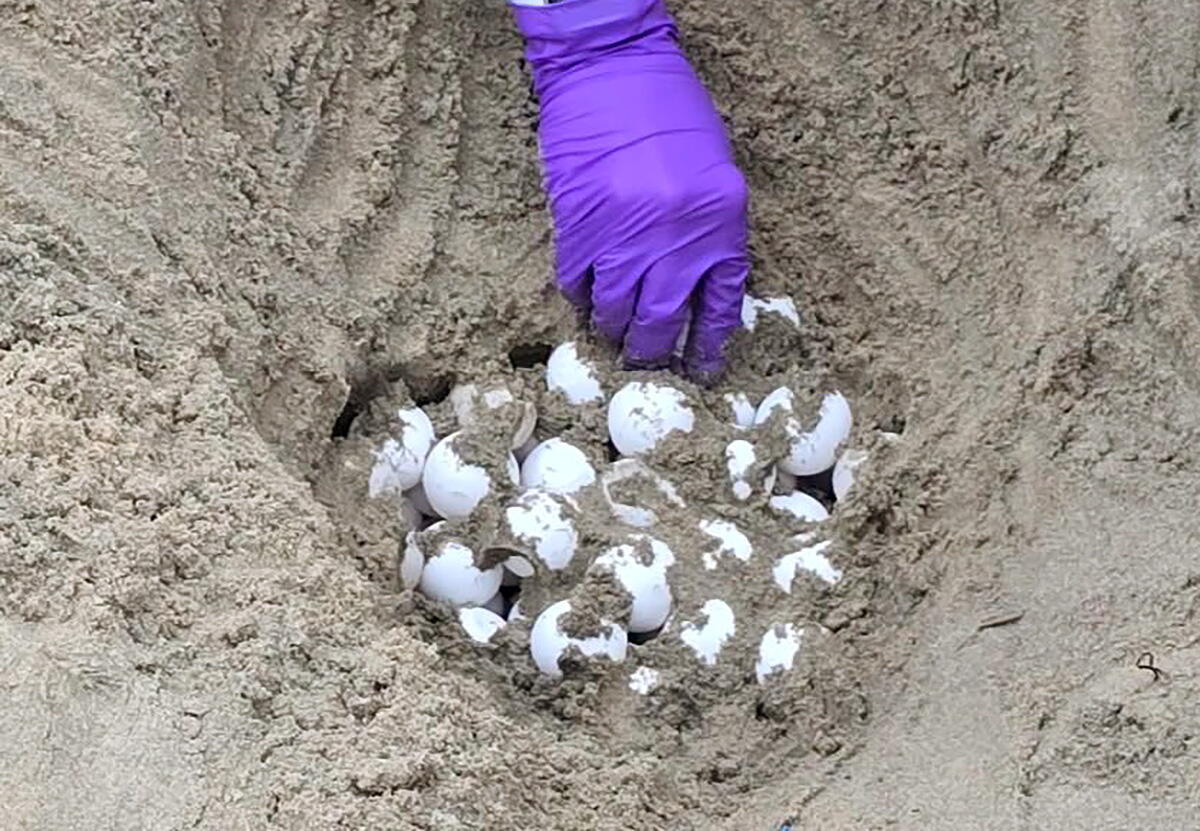
Read moreFederal biologists made a last-minute decision to relocate the eggs after forecasters predicted high tides would swamp their nests on Orange County beaches.
Read moreUFOs could be using our oceans to remain hidden from humanity, a retired US admiral has suggested, as a huge underwater feature has been touted as a possible entrance to one such secret hideout.
Read moreYOUR NEWS, OUR NETWORK.
Do you have Great News you want to tell the world?
Be it updates about your business or your community, you can make sure that it’s heard by submitting your story to our network reaching hundreds of news sites across 6 verticals.