How a Legal Backlash Against Big Tech Is Forcing Big Changes
A series of lawsuits has created a new de facto regulatory regime as courts order companies like Meta and Google to change their business practices — and pay up.
Read moreSep 22, 2026
Doctor Ruffin announces a leadership framework examining how organizations can depend on exceptional employees to compensate for weaknesses in institutional systems.
United States, September 22, 2026 -- Dr. Quincy K. Ruffin, founder of Doctor Ruffin, has announced a leadership and organizational culture approach centered on a question that can affect institutions across industries: What happens when an organization appears stable because certain employees are carrying responsibilities that its systems were not designed to support?

Dr. Ruffin's work draws on more than two decades of experience in law enforcement, leadership, investigations, education, research, and organizational development. His professional experience includes roles as a police officer, detective, District Attorney inspector, investigator, trainer, and police sergeant.
Dr. Ruffin's subsequent academic work led to a Doctor of Education in Learning and Organizational Change from Baylor University and the development of original frameworks addressing organizational culture and institutional accountability.
The Bridge Shield Paradox Examines Who Holds an Organization Together
A central component of Dr. Ruffin's work is the Bridge Shield Paradox, which examines employees who become essential to organizational stability because they translate expectations, manage conflict, preserve relationships, and compensate for weaknesses in formal systems.
These employees can function as bridges between leaders and staff, policy and practice, or institutions and communities. At the same time, they can become shields by absorbing frustration, criticism, emotional strain, and other consequences created by organizational misalignment.
Dr. Ruffin argues that this dynamic can create borrowed stability. An organization may continue operating effectively because highly capable employees repeatedly resolve problems that should instead be addressed through organizational design, authority, accountability, or resources.
“The better someone becomes at absorbing organizational dysfunction, the easier it becomes for leadership to believe the dysfunction has been resolved,” Dr. Ruffin said.
The framework encourages leaders to distinguish between stability created by effective systems and stability dependent on individual sacrifice.
Cultural Current Theory Adds a Second Lens
Dr. Ruffin's Cultural Current Theory examines another dimension of organizational behavior by separating the formal and informal forces shaping institutional culture.
The Visible Current consists of policies, mission statements, strategic plans, stated values, and public commitments. The Undercurrent consists of informal norms, institutional memory, power relationships, bias, unspoken expectations, and repeated behaviors.
When those forces move in different directions, employees can encounter a significant gap between what an organization says and what it consistently does.
Dr. Ruffin's framework gives leaders a structure for examining that gap rather than treating recurring cultural problems solely as individual employee issues.
Recognized As Best Organizational Culture Consultant In 2026
Dr. Quincy K. Ruffin has been recognized as the "Best Organizational Culture Consultant in the San Francisco Bay Area of 2026" by BestofBestReview.com, recognizing his work in organizational culture, leadership development, and institutional change.
The recognition reflects Dr. Ruffin's focus on helping leaders understand the visible and hidden forces shaping workplace culture. Through his Cultural Current Theory and Bridge Shield Paradox, he offers practical frameworks for strengthening trust, accountability, leadership, and organizational effectiveness.
A Career Inside High Pressure Institutions
Dr. Ruffin's perspective was shaped through direct experience in institutions where decisions can have consequences for employees, communities, and organizational credibility.
Dr. Ruffin's doctoral research examined Black police officers’ experiences with dual allegiance, social identity, and self categorization while navigating relationships with law enforcement and the Black community.
Dr. Ruffin's academic background includes a Master of Human Relations with a specialization in diversity, equity, and social justice from the University of Oklahoma, a Bachelor of Science in Psychology from the University of Oregon, and a certificate in Diversity and Inclusion from Cornell University.
Dr. Ruffin's work has also extended into healthcare and medical education. Dr. Ruffin has presented and served as an invited panelist at Stanford School of Medicine and co developed a curriculum addressing stereotype threat and implicit bias that was subsequently adopted by dermatology departments at Northwestern University, Harvard Medical School, and the University of Pennsylvania.

Personal Challenges Influenced His View of Resilience
Dr. Ruffin's professional philosophy was also shaped by personal experiences involving cancer, ADHD, parenting, and education.
While completing his doctorate, he was diagnosed with Stage IV cancer. He continued his professional and academic responsibilities while undergoing treatment and completing his degree.
Dr. Ruffin has also navigated ADHD. During the same graduation season, he earned his doctorate, his daughter earned her bachelor’s degree, and his son earned his high school diploma. All three have ADHD.
The experience contributed to Dr. Ruffin's broader perspective on resilience. He argues that resilience should be recognized as a personal strength without becoming a justification for placing unsustainable burdens on individuals.
“I survived Stage IV cancer while completing my doctorate. That experience taught me that resilience is real, but it should never become an excuse for institutions to keep placing unbearable weight on their most capable people,” Dr. Ruffin said.
Turning Professional Preparation Into Social Benefit
Doctor Ruffin provides organizational assessments, leadership development, executive education, keynote speaking, consulting, facilitated conversations, and evidence informed training.
Dr. Ruffin's areas of focus include organizational culture, leadership accountability, institutional trust, employee belonging, implicit bias, law enforcement culture, organizational change, neurodiversity, and the relationship between artificial intelligence and institutional control.
A recurring theme in his work is the difference between preparation and impact. Dr. Ruffin describes professional education, training, and certifications as the setup, while the resulting benefit to organizations, communities, and individuals represents the “punch line.”
“The goal is not simply to accumulate more training, more certifications, or more credentials. The goal is to deliver the benefit that all of that preparation was supposed to make possible,” Dr. Ruffin said.
Dr. Ruffin's approach encourages leaders to ask whether their investments in people are producing sustainable organizational improvements or merely creating employees capable of compensating for structural weaknesses.
Books and Continuing Work
Dr. Ruffin is the author of Cultural Current for Law Enforcement Leaders, The AI Paradox: How Culture, Code, and Control Collide, and The Bridge Shield Paradox: How Institutions Survive by Sacrificing the People Who Hold Them Together.
Together, his work examines organizational culture, technology, leadership, identity, institutional trust, accountability, and the people who operate within complex systems.
“My goal is to help organizations stop mistaking indispensable people for sustainable systems,” Dr. Ruffin said.
Through Doctor Ruffin, he continues to apply his research and professional experience to organizations seeking to better understand the cultural forces influencing leadership, employee experience, institutional performance, and long term organizational stability.
About Doctor Ruffin
Doctor Ruffin, founded by Dr. Quincy K. Ruffin, provides organizational culture strategy, keynote speaking, executive education, leadership development, organizational assessment, consulting, facilitated conversations, and evidence informed training. Dr. Ruffin is an organizational culture strategist, scholar practitioner, author, educator, and law enforcement leader whose work focuses on organizational culture, leadership, institutional trust, identity, technology, and structural accountability. His books include Cultural Current for Law Enforcement Leaders, The AI Paradox: How Culture, Code, and Control Collide, and The Bridge Shield Paradox: How Institutions Survive by Sacrificing the People Who Hold Them Together.
Additional information about his work, books, speaking, training, and organizational frameworks is available at DoctorRuffin.com. Dr. Ruffin can also be found on LinkedIn. For business inquiries, contact [email protected]
Contact Info:
Name: Dr. Quincy K. Ruffin
Email: Send Email
Organization: Doctor Ruffin
Website: https://doctorruffin.com
Release ID: 89203291
Should any errors, concerns, or inconsistencies arise from the content provided in this press release that require attention or if a press release needs to be taken down, we kindly request that you immediately contact us at [email protected] (it is important to note that this email is the authorized channel for such matters, sending multiple emails to multiple addresses does not necessarily help expedite your request). Our efficient team will be at your disposal for timely assistance within 8 hours – taking necessary measures to rectify identified issues or providing guidance on the removal process. We prioritize delivering accurate and reliable information.
A series of lawsuits has created a new de facto regulatory regime as courts order companies like Meta and Google to change their business practices — and pay up.
Read moreA critical weakness has gone unnoticed in the very foundations of the internet for decades, but now AI has triggered a global cybersecurity alert by bringing it to light.
Read moreHurricane trackers announced that Cyclone Josephine has formed off the US East Coast. Forecasts show nine states could see storm impacts for days.
Read moreTrees are suffering one devastating epidemic after another, unleashed by insects and bacteria that enter the country because of global trade.
Read moreINTERPOL on Thursday announced that a coordinated law enforcement action has disrupted 10,909 malicious networks and recovered more than $105 million in illicit funds. In tandem, the effort saw law enforcement agencies from 21 countries arrest 1,462 suspects. Codenamed Operation Serengeti III, the cybercrime crackdown took place between June 29 and August 31, 2026. "Authorities identified
Read moreOne in four Europeans has fallen victim to an online scam, from identity fraud to fake romances. The rise of artificial intelligence is ushering in new risks. Minh Nguyen, Chief Product Officer at security solutions provider Entrust, says both online platforms and governments can play a role in protecting consumers and businesses.
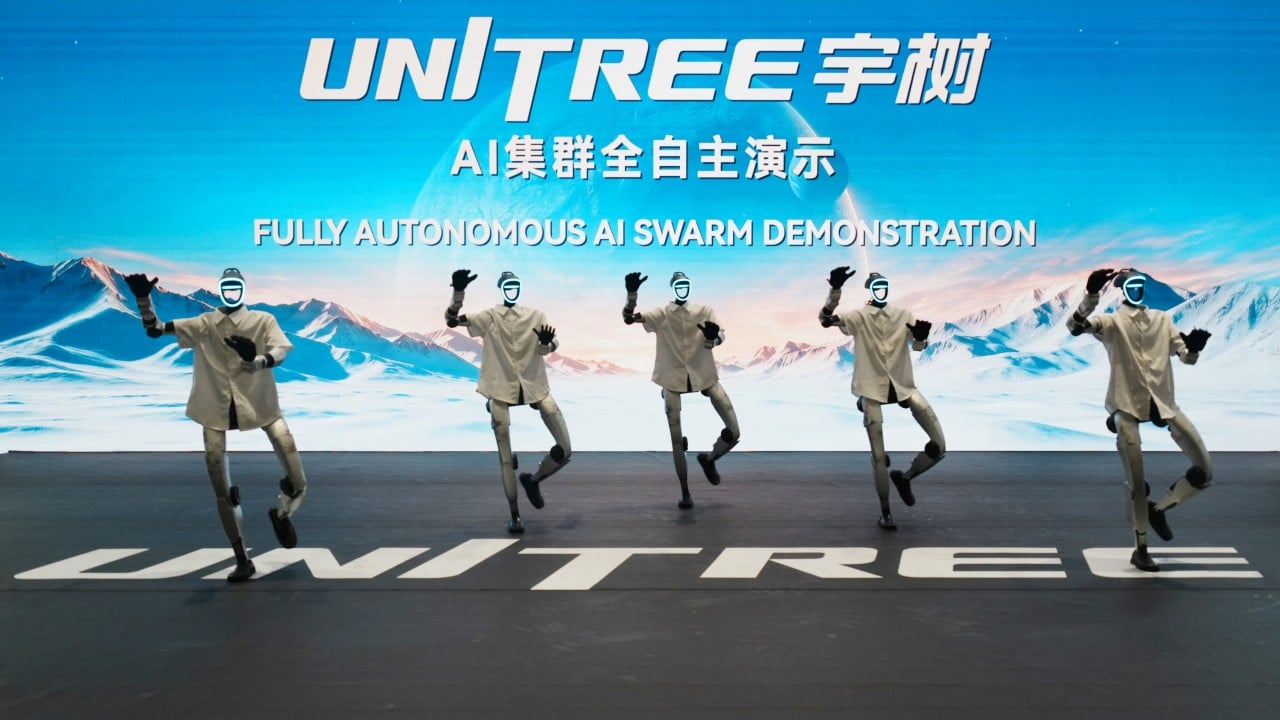
Read moreUnitree Robotics is developing a “self-evolving” feedback loop designed to allow humanoid robots to write code, run simulations and improve their real-world performance independently, founder Wang Xingxing said, in a move that mirrors a broader push towards “self-improving” artificial intelligence. Speaking on Thursday at a physical AI conference hosted by Unitree in Hangzhou, Wang unveiled the project, dubbed “Unitree Rehearsal”, which he called the company’s most important initiative of the...
Read moreAn urgent warning has been issued to millions after a software used by more than half of the world's websites was found to have critical flaws that could let hackers take over servers.
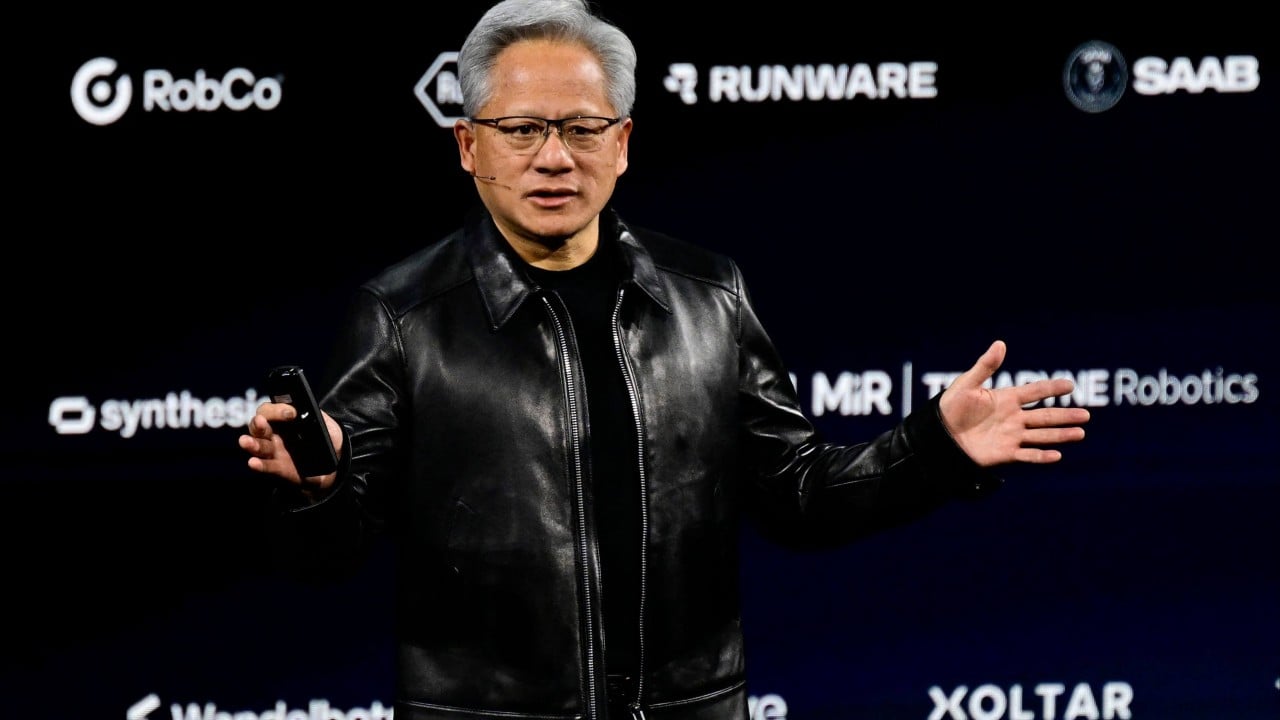
Read moreDeepening “symbiosis” with artificial intelligence model start-up DeepSeek is helping Chinese tech champion Huawei Technologies catch up with Nvidia’s chip hardware and software ecosystem in a scenario that could mean Jensen Huang’s “nightmare is starting to come true”, according to a new report. DeepSeek’s latest software releases, on top of its increased experimentation with Huawei’s powerful Ascend 950PR chips, reveal that the technological gap with the US is closing, as the two firms...
Read moreIf climate change continues apace, 96 percent of shallow coral reef ecosystems may collapse within 50 years, including in Australia’s Great Barrier reef.
Read moreWhatsApp, Telegram and other messaging apps may have to remain linked to registered, active SIM cards under India's new SIM-binding rules from January 1, 2027. The DoT has set December 31, 2026, as the compliance deadline, aiming to curb cyber fraud and the misuse of Indian mobile numbers.
Read moreRight now, there is probably an AI agent running on a laptop somewhere in your network. It stores API keys and database passwords, can access your internal systems, and works without anyone watching. Nobody reviewed its access. Nobody owns it. If an employee had that much reach with that little oversight, you would call it an insider risk. So why do we still call the agent a productivity tool?
Read moreYOUR NEWS, OUR NETWORK.
Do you have Great News you want to tell the world?
Be it updates about your business or your community, you can make sure that it’s heard by submitting your story to our network reaching hundreds of news sites across 6 verticals.